
You know the moment. You've been sitting comfortably — reading, watching television, finishing a cup of tea — and now it's time to stand. But instead of simply rising, there's a small pause. Maybe a hand on the armrest, a rock forward to build momentum, a little more effort than there used to be.
If that sounds familiar, you're in very good company. Finding it harder to get up from a chair is one of the most common changes people notice after 55 — and, reassuringly, one of the most improvable. It isn't a sign that decline is inevitable. It's usually a sign that a few specific muscles simply need a little regular practice.
Here's what's really going on, and six gentle ways to make rising feel easy again.
Why rising from a chair gets harder after 55
Standing up is a surprisingly complex movement. In one smooth motion you fire up your thigh muscles, your glutes (the muscles at the back of your hips), your core, and your balance system — all at once. After 55, a few of these quietly change:
- Leg and glute strength gradually fades. From our 50s onward, we naturally lose a little muscle each year unless we actively use it. The thighs and glutes — the exact muscles that power you upward — are often the first to weaken.
- Hips, knees and ankles get stiffer. Less flexibility means it takes more effort to fold forward and push up through the right angle.
- Balance signals slow down. The tiny adjustments that keep you steady as you rise happen a fraction more slowly, so the movement can feel less confident.
- We simply practise it less. The more time we spend seated, the less our body rehearses standing — and any movement you don't practise becomes harder over time.
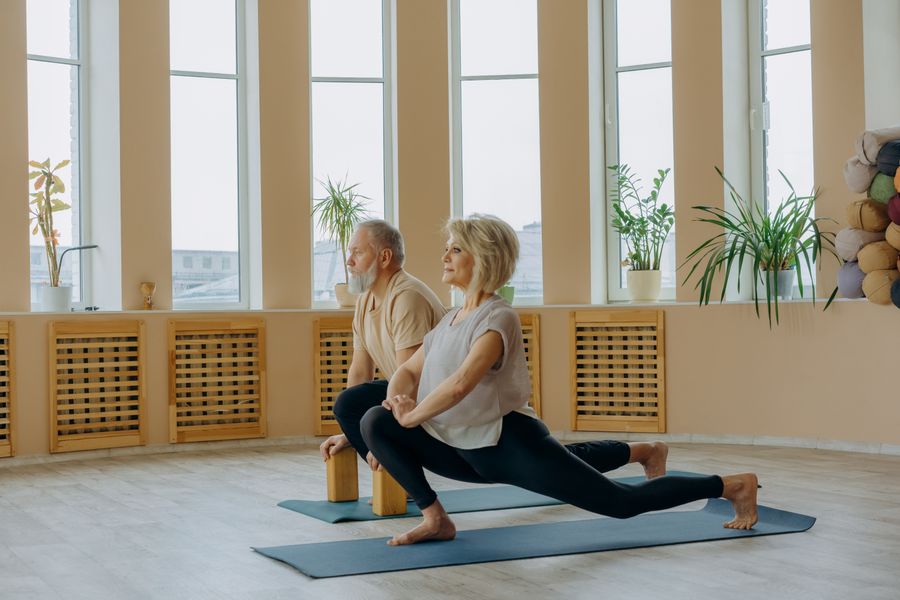
Why this small movement matters more than it seems
Health researchers often pay attention to how easily someone can move from sitting to standing, because it quietly reflects lower-body strength, balance and independence all at once. The encouraging part is that it responds quickly to gentle practice. Unlike some things that change with age, this one is very much in your hands — most people notice real improvement within a few weeks of small, consistent effort.
So rather than something to worry about, think of an easier chair-rise as a simple, motivating goal. Here's how to get there.
6 gentle ways to rise with ease again
1. Practise the movement itself
The single most effective exercise is the one that looks exactly like the problem: the sit-to-stand. From a sturdy chair, scoot toward the front edge, plant your feet, and stand up and sit back down slowly, using your hands only as much as you need. Start with five, rest, and repeat. Over a few weeks, aim to use your arms a little less each time. Your body learns the movement by rehearsing it.
2. Gently strengthen your legs and glutes
Because weak thighs and glutes are the usual culprits, a little gentle strengthening goes a long way. Soft resistance work — done seated or standing with support — rebuilds exactly the muscles that lift you out of a chair, without any strain or gym equipment. Our Gentle Resistance Bands were chosen with this in mind: light, comfortable, and designed for leg and hip work at home, at your own pace.
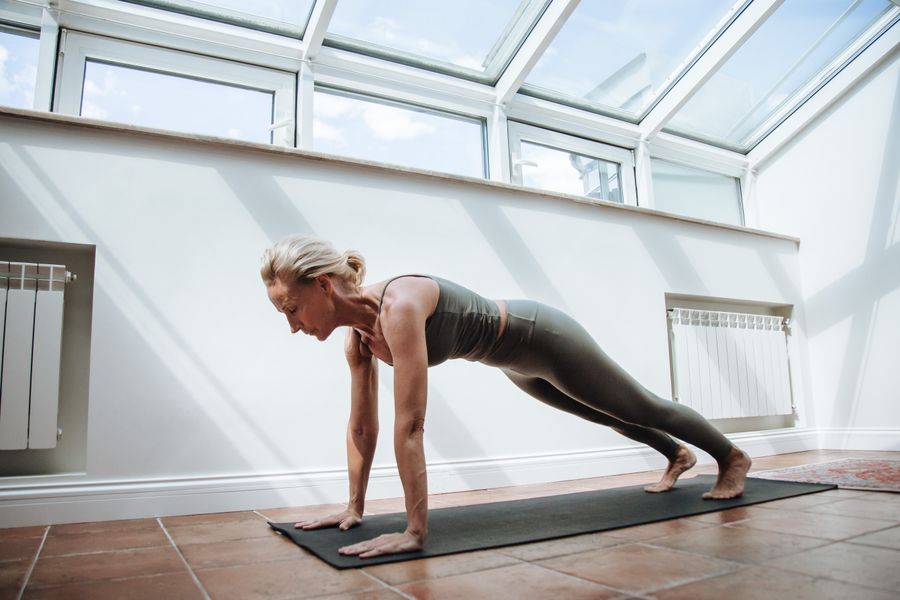
3. Loosen tight hips and ankles
Stiffness makes rising feel heavier than it needs to. A few minutes of gentle daily stretching for the hips and ankles restores the range of motion that lets you fold forward and push up smoothly. If tight hips are part of your picture, our guide to gentle stretches for stiff hips and a stiff back after 55 is a good place to start.
4. Use the right technique
A little know-how makes an immediate difference. Next time you stand, try this sequence: scoot to the front of the seat, draw your feet back so they're under your knees, lean your nose forward over your toes, then push up through your heels. Shifting your weight forward before you rise means your leg muscles do the work in their strongest position — it's often the difference between a struggle and a smooth stand.
5. Set up your space to help you
Your environment matters more than most people realise. A firm chair with a slightly higher seat is far easier to rise from than a soft, low, sinking sofa. Where you can, choose seats with armrests, add a firm cushion to lower chairs, and keep the chairs you use most at a comfortable height. This isn't giving in — it's setting yourself up to succeed while your strength builds.
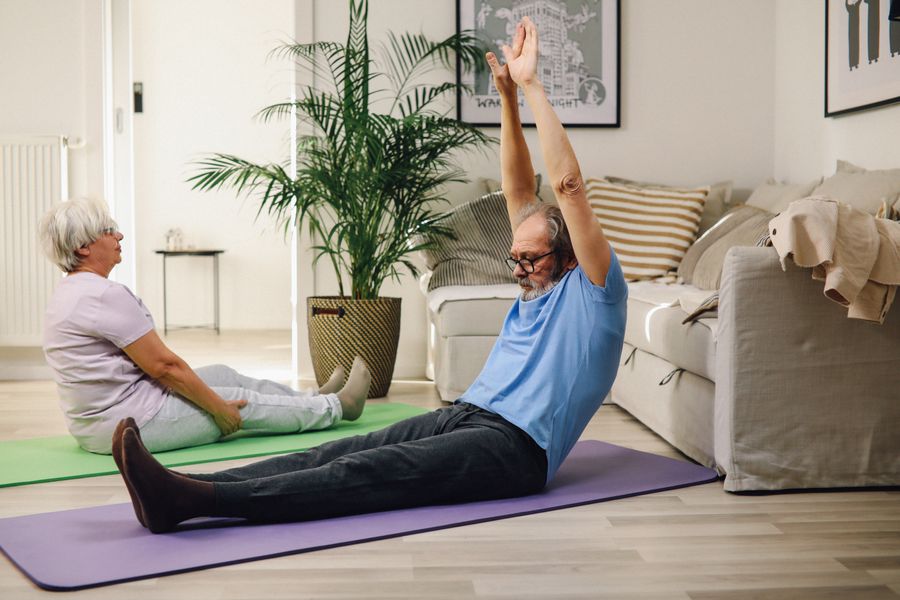
6. Keep moving through the day
The more often you rise from a chair, the easier each rise becomes. Long stretches of sitting let the muscles switch off; frequent small movements keep them ready. A gentle rule of thumb is to stand up once an hour, even just to stretch or walk to the window. Our article on sitting too much after 55 has more simple ideas to weave movement into an ordinary day.
And the harder version: getting up from the floor
If rising from a chair is one milestone, getting up from the floor is the next — and it's worth quietly keeping up. Being able to lower yourself down and back up again gives you freedom: to garden, to play on the floor with grandchildren, to reach a low cupboard, and to get back up confidently if you ever have a fall. Practise it gently near a sturdy piece of furniture you can hold, and never rush. The same strong legs, mobile hips and good technique that ease you out of a chair are exactly what carry you up off the floor. For steadiness on your feet, our 5 simple balance exercises pair well with this.
A steadier, more confident you
That pause before you stand isn't something to accept quietly — it's an invitation to do a little gentle work that pays off surprisingly fast. Practise the movement, strengthen your legs, loosen your hips, use good technique, set up your space, and keep moving through the day. Within a few weeks, most people find they rise more easily and feel steadier on their feet — and that confidence carries into everything else.
You'll find gentle tools to support leg and hip strength in our Mobility & Posture collection, all chosen for comfort and ease after 55.

New to Olyvita? Use code WELCOME10 for 10% off your first order.
This article is for general information only and is not medical advice. If you have joint pain, balance concerns, a health condition, or any worries about standing, rising, or starting a new exercise routine, please speak with your GP or a qualified health professional first. If you have had falls or feel unsteady, ask about a proper balance assessment.
0 comentarios