
You can walk to the shops without much trouble. You can manage the garden. But the moment you start coming down the stairs, your knee lets you know about it — a twinge, a grinding feeling, sometimes a sharp catch that makes you grab the handrail.
If that sounds familiar, you are in very good company. Difficulty on stairs — especially going down — is one of the most common everyday complaints among adults over 55. And it is one of the most misunderstood, because most people assume it means their knees are simply "worn out" and there is nothing to be done.
There usually is. Let's look at why descending is harder than climbing, and six gentle things that tend to make a real difference.
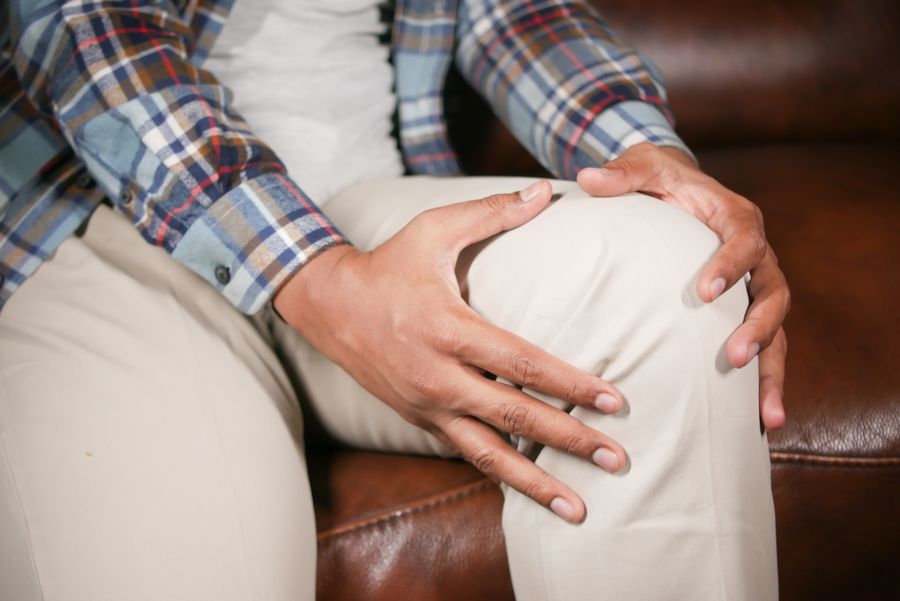
Why going down is harder than going up
It feels backwards, doesn't it? Climbing takes more breath and more effort, yet coming down is what hurts.
The reason is in how your muscles work. Going up, your thigh muscles shorten to lift you. Going down, they have to lengthen slowly while holding your entire body weight — like lowering a heavy box to the floor instead of picking it up. That controlled lowering places far more load through the knee joint, and in particular through the kneecap, than climbing does.
Add gravity and the fact that you land on one leg at a time, and a single step down can send several times your body weight through one knee. On a staircase of thirteen steps, that adds up quickly.
So stairs are not a sign that something dramatic is wrong. They are simply the most demanding thing most of us ask our knees to do in an ordinary day — which is why they are the first place a small weakness or stiffness shows up.
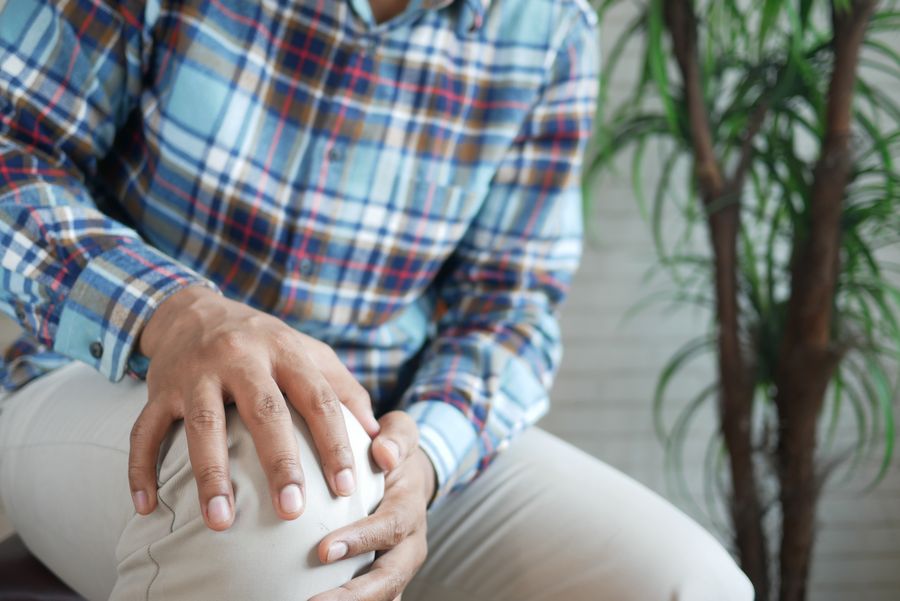
What is usually behind it
Four things tend to be involved, often together:
Thigh muscles that have quietly weakened. The quadriceps at the front of the thigh act as the knee's shock absorber. They lose strength gradually from midlife onwards unless we give them a reason not to — and the loss is easy to miss until stairs expose it.
Hips that are not pulling their weight. When the muscles around the hip and buttock are weak, the knee tends to drift inward on each step down. That small wobble changes how the kneecap tracks and creates friction where there should be none.
Tight calves and ankles. If your ankle doesn't bend far enough, your knee has to compensate on every descent. Stiff ankles are one of the most overlooked causes of sore knees.
Ordinary joint change. Some smoothing and thinning of cartilage is a normal part of ageing, and it shows up under load first. Importantly, this does not decide how much discomfort you feel — plenty of people with visible joint change on a scan have comfortable knees, because the muscles around them are doing their job.
If you are unsure whether what you feel is coming from the knee at all, our guide to telling hip pain from knee pain is a useful place to start.
6 gentle ways to make stairs easier
1. Change how you come down
Technique alone can take a surprising amount of load off the joint. Use the handrail — properly, not as decoration. Place your whole foot on the step rather than the ball of the foot. Take the steps one at a time if that feels steadier, leading with the more comfortable leg going up and the less comfortable leg going down. Slow, controlled, deliberate.
None of this is giving in. It is spreading the work across your arms, hips and both legs instead of asking one knee to absorb all of it.
2. Rebuild the thigh muscles with sit-to-stands
This is the single most useful exercise for stairs, and you already own the equipment: a dining chair.
Sit towards the front of the chair, feet flat and slightly back, and stand up without using your hands. Then lower yourself back down slowly — count to three on the way down. That slow lowering is exactly the movement your knee performs on a step, practised in a safe, controlled way.
Start with five, twice a day. Build towards ten. If standing without hands is too much at first, use the armrests and gradually rely on them less.
3. Wake up the hips
Strong hips keep the knee tracking straight. Side-stepping with a soft resistance band around the thighs is one of the gentlest ways to build that strength — you stay upright, there is no impact, and you can do it holding a kitchen worktop for balance.
Our Gentle Resistance Bands were chosen for exactly this kind of work: fabric rather than latex so they don't roll or pinch, and light enough resistance to start comfortably. Ten small steps to the right, ten to the left, once a day is a genuine start.
4. Free up the ankles and calves
Stand facing a wall, hands on it, one foot back with the heel down, and lean forward gently until you feel a stretch through the calf. Hold for 30 seconds each side, morning and evening.
If you would like something more consistent than a wall, an adjustable stretch board gives you the same stretch at a fixed angle, which makes it far easier to do properly while the kettle boils.
5. Warmth before, comfort after
Knees that have stiffened overnight cope with stairs badly. A few minutes of gentle warmth and movement before you tackle the first descent of the day makes a noticeable difference — even just sitting on the edge of the bed and swinging the lower legs twenty times.
For the end of a long day, our guide to choosing heat or cold explains which suits which situation. You will also find our comfort essentials in the Recovery & Comfort collection, including the botanical Joint Comfort Patches for evenings when you would rather sit still than fuss with a hot water bottle.
6. Keep the small daily habits
Three quiet things that add up: wear shoes with real cushioning and a supportive sole indoors as well as out (slippers are often the culprit); stand up and move every 45 minutes or so, because knees stiffen fastest when they stay still; and keep walking on the flat, which maintains the strength that stairs demand without the same load.
If steadiness is part of your concern too, our five simple balance exercises pair very well with everything above.
When to speak to your GP
Most stair discomfort responds well to strength and technique. But do arrange an appointment if the knee gives way or locks, if it swells noticeably, if the discomfort wakes you at night, if it follows a fall, or if it is getting steadily worse despite several weeks of gentle work.
Those are signals worth having looked at properly rather than working around.
Give it six weeks
Muscle responds slowly at any age, but it does respond. Most people who commit to sit-to-stands and a little hip work notice the difference on the stairs somewhere between four and six weeks in — usually not as a dramatic moment, but as a quiet realisation that they came down without thinking about it.
That is the goal. Not stairs you brace for. Just stairs.
New to Olyvita? Use code WELCOME10 for 10% off your first order. Explore the Recovery & Comfort collection for gentle everyday support, chosen with adults 55+ in mind.
This article is for general information only and is not medical advice. Olyvita products are comfort and wellbeing aids, not medical devices or treatments. If you have a diagnosed joint condition, recent injury, or persistent discomfort, please speak to your GP or a qualified physiotherapist before starting new exercises.
0 comments